What Is Data Engineering? A Practical Guide for Businesses
What Is Data Engineering? A Practical Guide for Businesses
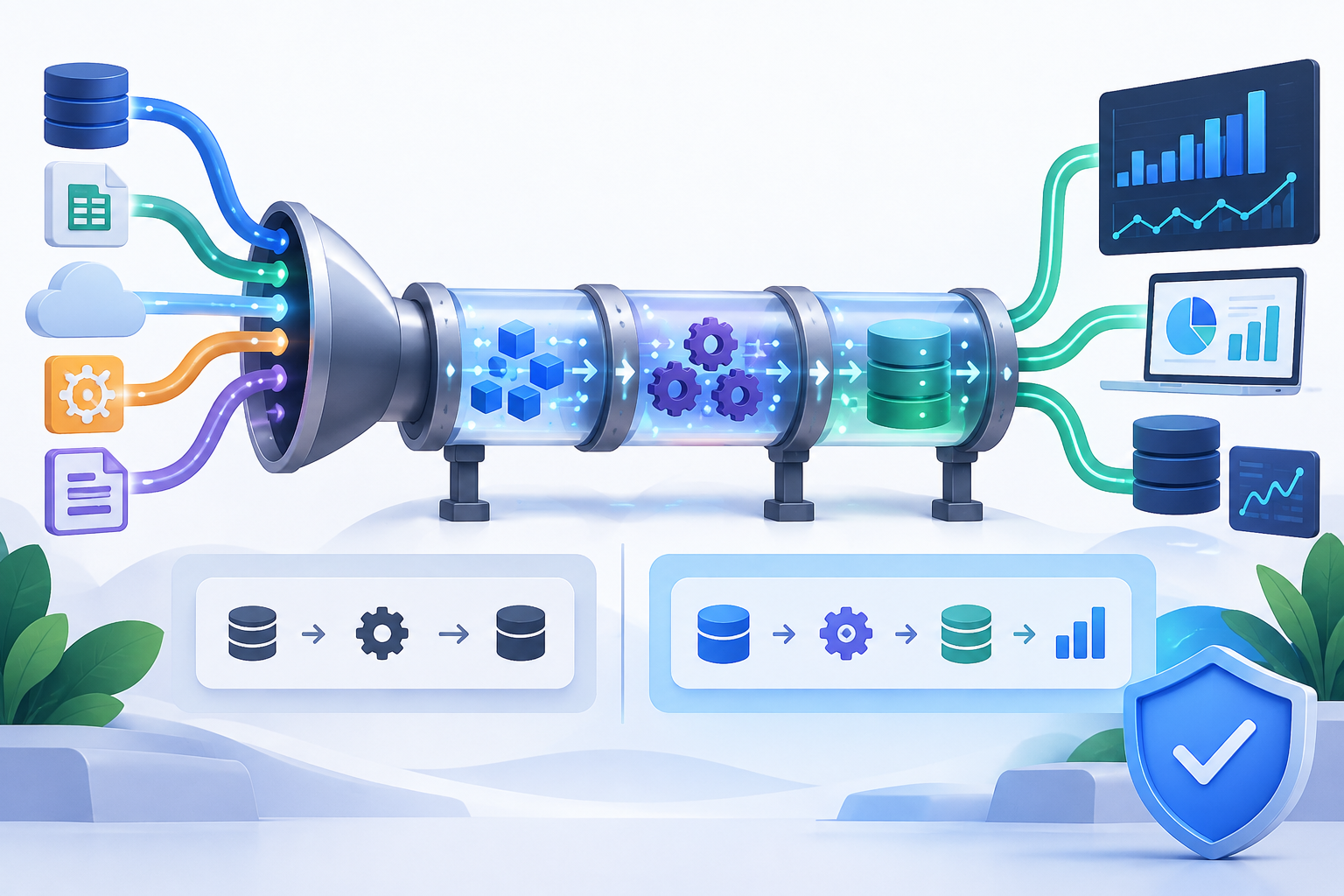
Data engineering is the discipline that designs, builds, and maintains the systems that reliably collect, transform, and make a company's data available: the infrastructure that enables analytics, reporting, and artificial intelligence to work with accurate data. If you search for this term on Google, most results will likely focus on university degree programs. This article addresses something different: what data engineering means for a business that needs to make better decisions, rather than for someone choosing a career path.
image
That distinction is no coincidence. Demand for this discipline has grown at a pace that few areas of technology have been able to match in recent years.
Recent technology industry reports indicate that data engineering employment has grown approximately 21–23% year over year, with demand for this role outpacing the growth of data science job openings by as much as 50%. Globally, an estimated 2.9 million data-related positions remain unfilled.
This growth is not just another passing technology hiring trend. It reflects something we at Infomedia see confirmed project after project. More and more companies are discovering that their analytics and artificial intelligence initiatives are not being held back by a lack of algorithms, but by the absence of a reliable data foundation on which to build those algorithms.
What Is Data Engineering? (Beyond the Textbook Definition)
Before moving forward, an important clarification: this article approaches the subject from a business perspective, not an academic one. The question we want to answer is not "what do you study in a data engineering degree?" but rather "what does this discipline actually do for a real business?"
The analogy that explains it best is this: if data science is the kitchen—where information is analyzed, experiments are conducted, and insights are generated—data engineering is the supply chain. It ensures that the right ingredients arrive clean, on time, and in the right quantities. A brilliant chef cannot prepare a great meal with spoiled or incomplete ingredients, regardless of their talent. Likewise, a company with the best data science team on the market cannot generate reliable predictions if the information feeding its models is inaccurate, outdated, or incomplete.
What Exactly Does a Data Engineering Team Do?
- Designs data architecture: The complete blueprint of how information flows between systems within a company.
- Builds and maintains data pipelines: Automated processes that continuously and reliably move and transform information.
- Models data to ensure consistency: Defines how information is structured and connected so everyone in the company speaks the same "data language."
- Ensures data quality: Designs validations and controls that prevent incorrect data from reaching business reports and models.
- Integrates systems and migrates data: Connects platforms that previously operated in isolation and transfers information between systems without disrupting business operations.
Each of these responsibilities deserves its own detailed discussion—and we have explored them in dedicated articles on data architecture, data models, data pipelines, data quality, data integration, and data migration. This article serves as a starting point: the big-picture map before diving deeper into each component.
Data Engineering vs. Data Science vs. Analytics: What's the Difference?
| Discipline | Key Question It Answers | Typical Deliverable | Associated Role |
|---|---|---|---|
| Data Engineering | How do we ensure data arrives clean and on time? | Pipelines, architecture, data infrastructure | Data Engineer |
| Data Science | What patterns or predictions can we extract from data? | Predictive models, algorithms | Data Scientist |
| Business Analytics | What happened and why, in terms the business can understand? | Reports, dashboards, actionable insights | Data Analyst |
The most common misconception about these three disciplines is assuming that certain steps can be skipped: hiring a brilliant data scientist and expecting them to also solve the infrastructure problems that fall under data engineering.
In practice, data science depends on having a solid data engineering foundation in place first. Building in the reverse order is, all too often, the reason why many companies' AI projects never fully get off the ground.
When Should a Company Invest in Data Engineering?
There are warning signs that appear in almost every assessment: reports from different departments that provide conflicting answers to the same business question, decisions made based on "what each person thinks the Excel spreadsheet says," and artificial intelligence or Business Intelligence projects that move slowly because teams spend more time cleaning data than analyzing it.
One important clarification: data engineering is not exclusive to large or digitally native companies. The right time to invest in it is before scaling, not afterward. Companies that postpone this investment until their data problems become unmanageable often end up paying a much higher cost to fix those issues than they would have spent building a solid foundation from the beginning.
Should You Build an Internal Team or Work with an External Partner?
This is perhaps the most strategic decision in the entire process, and there is no single correct answer—it depends on each company's level of maturity. In reality, there are three possible approaches, and none is automatically better than the others.
- Option 1 — Build internal capabilities: Hire or train data engineers within the organization. This makes sense when data is a central and permanent part of the business.
- Option 2 — Work with an external partner: Bring in specialized expertise for architecture and process design, particularly when that expertise would be expensive to maintain internally on a full-time basis.
- Option 3 — Adopt a hybrid approach: Strengthen the internal team with external specialists, combining the existing team's business knowledge with the technical expertise of an external professional.
The third option deserves a closer look because it is more common than it might seem. Many companies already have a capable IT team but need to strengthen it with the specific skills of a data engineer. We have explored this role in detail, including how to evaluate candidates effectively, in our article on what a Data Engineer does and how to identify the right candidate.
How Infomedia Helps Implement Data Engineering in Your Business
At Infomedia, we address this need through two complementary approaches, without favoring either one before understanding what each client truly requires.
On one hand, our Data Architecture, Modeling, and Quality service designs and implements the complete infrastructure when the main challenge is architectural design.
On the other, our Staff Augmentation service strengthens internal teams with specialized talent—including data engineers—when the challenge is execution capacity rather than design.
In fact, most of the projects we have supported end up combining both approaches: we design the target architecture while simultaneously helping the client build or strengthen the team that will maintain it over time. After all, an architecture without people to operate it deteriorates just as quickly as one that was never properly designed.
Frequently Asked Questions
What is the difference between data engineering and data science?
Data science analyzes information to generate predictions and insights, while data engineering builds and maintains the infrastructure that makes that analysis possible. Without a solid data engineering foundation, data science operates on unstable ground, regardless of how sophisticated its models may be.
How much does it cost to implement data engineering in a mid-sized company?
It depends on the scope. A project focused on a specific data domain (for example, consolidating sales data) costs considerably less than a complete transformation of the company's data infrastructure. The general recommendation is to start with the domain that has the greatest business impact rather than trying to transform the entire organization at once.
Do I need a full data engineering team, or can I start with just one person?
You can—and in many cases, you should—start with one person or a small team, supported by an external partner for the initial architecture design. Gradually expanding the internal team as needs grow is often more sustainable than hir